
From the rapid expansion of the metro network and the return of major sporting events to delayed civic elections and unresolved questions within the government over leadership, the upcoming year may emerge as a watershed moment when governance is judged less by intent and more by execution.
For the Congress government led by chief minister Siddaramaiah, 2026 marks the midpoint of its tenure. With the next assembly election scheduled for 2028, the political focus is expected to move from rolling out welfare guarantees to defending how those commitments have been funded and delivered.
At the same time, speculation around leadership arrangements within the Congress is expected to continue through the year. While no formal change is assured, internal power sharing discussions are likely to remain part of the political backdrop, framed publicly as organisational matters rather than responses to pressure. The Bharatiya Janata Party, still competitive electorally but uneven in its organisational strength, is expected to use 2026 to sharpen its critique of urban governance, particularly in Bengaluru, where infrastructure delays and service failures are most visible.
Relations between the state and the Centre are also set to remain politically charged. Karnataka’s push for a higher share of tax devolution and quicker approvals for infrastructure funding is expected to intensify as major projects enter more expensive phases.
One of the most closely watched developments in 2026 is expected to be the conduct of urban local body elections. Bengaluru has functioned for years without an elected civic council, governed instead by administrators amid delays linked to ward delimitation, reservation disputes, and court cases.
For political parties, these polls are expected to serve as a key indicator of urban voter sentiment ahead of the next Assembly election.
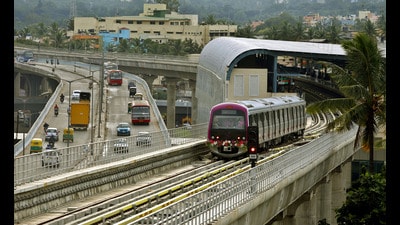
The most visible physical change in Bengaluru during 2026 is expected to be the expansion of the Namma Metro network. By the end of the year, the operational length is projected to reach roughly 170 to 175 kilometres, according to an earlier statement by deputy chief minister DK Shivakumar.
Road infrastructure will continue to face pressure even as metro construction eases in certain corridors. Flyovers, underpasses, and signal free corridors are expected to remain works in progress. Flood mitigation projects, including the redevelopment of storm water drains, are likely to be tested again during the monsoon, particularly in low lying areas and technology hubs. Conflicts over land use, redevelopment, and densification are expected to intensify, drawing in courts, citizen groups, and political actors.
Economically, Bengaluru is expected to remain the core driver of growth in Karnataka, though the nature of that growth is evolving.
Expansion in areas such as artificial intelligence, semiconductor design, defence research, and deep technology manufacturing is expected to outpace traditional software services, according to earlier statements by state ministers such as Priyank Kharge.
While this change promises high value employment, it also raises concerns about access, particularly for graduates from smaller institutions, Kannada medium backgrounds, and rural districts.